
What is Classical Education?
An Introduction
Classical Catholic education is the means by which we form disciples of Jesus Christ and educate the whole person: mind, body, and soul. Rooted in the Catholic intellectual tradition and the liberal arts, our approach is ordered toward wisdom and virtue.
Our academic program is intentionally rigorous and designed to prepare students for success in college, their vocation, and beyond. We form students to be disciplined thinkers who can analyze complex ideas, articulate their beliefs with clarity, and engage the modern world with confidence. Graduates are well prepared for the academic demands of higher education and also equipped with the intellectual habits, moral formation, and sense of purpose.
Our curriculum places students in sustained conversation with Scripture, philosophy, history, literature, and theology through the study of great books and primary sources rather than diluted summaries or textbooks alone. By encountering original texts and ideas, students learn to wrestle with enduring questions about truth, justice, beauty, human nature, and God. Seminar-based classes cultivate careful reading, thoughtful dialogue, analytical writing, and sound moral judgment, while mathematics and science are taught with intellectual seriousness and a faith-informed understanding of the order and intelligibility of creation.
This classical approach forms the mind according to the Catholic worldview: reason illuminated by faith, freedom guided by truth, and knowledge ordered toward wisdom. Students are challenged not only to master content, but to pursue excellence, practice virtue, and seek what is objectively true. Academic achievement and spiritual formation are not competing goals, rather they are inseparable. Through a demanding curriculum grounded in the liberal arts and the teachings of the Church, we prepare young men and women to thrive in college, lead with integrity, and live faithfully in service of Christ and His Church.

Additional Resources
Lumen Accreditation - Learn More
Meet our Faculty - Learn More
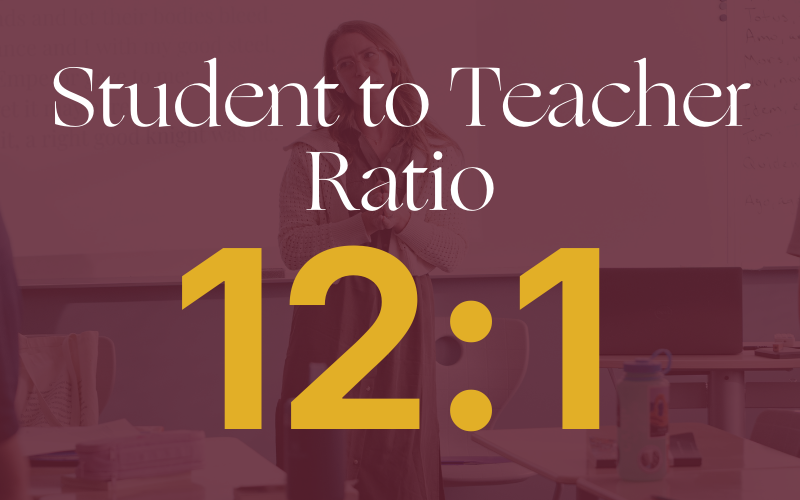
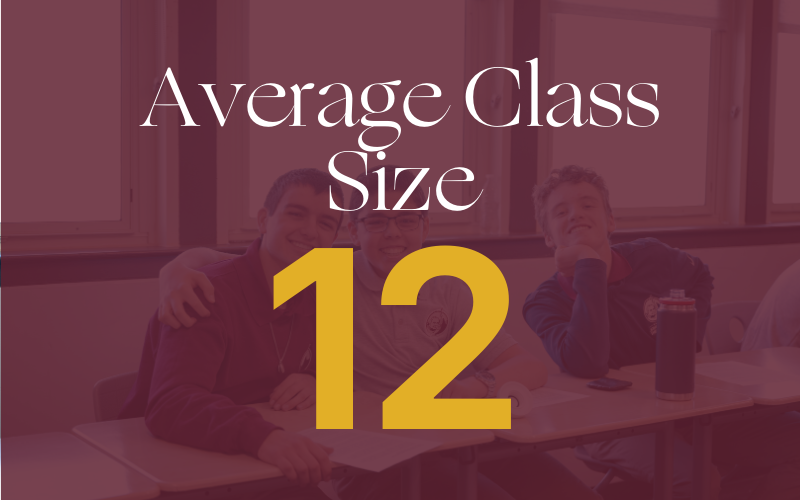
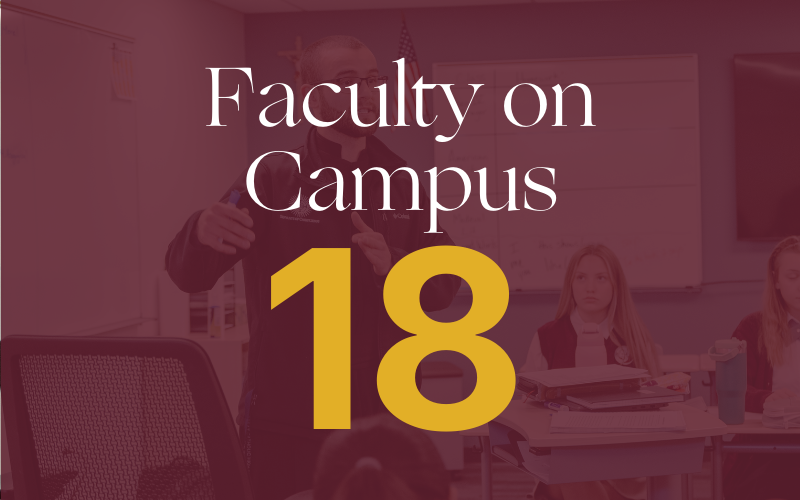
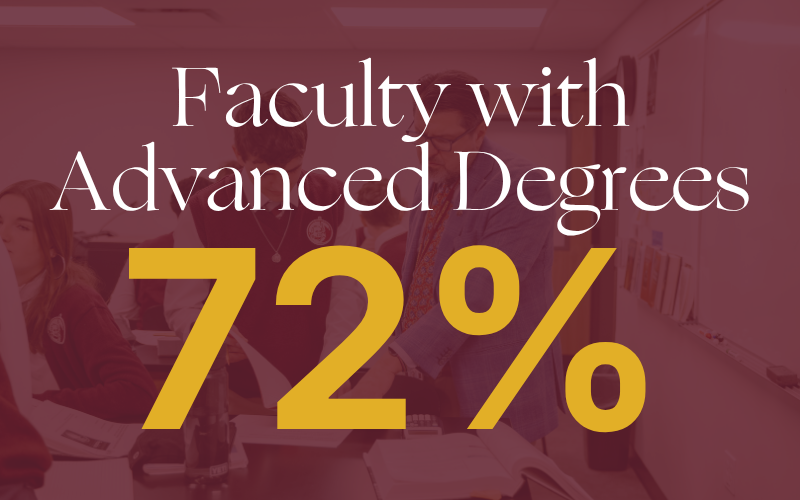
By the Numbers
Frequently Asked Questions
-
At St. John Paul the Great, our teachers adopt a deliberately low-tech approach in our classrooms. Our students spend time reading great old books, annotating them, narrating them, and discussing them with their peers under the guidance of wise and patient instructors. Our students memorize and recite poetry, discuss things in class, and write papers by hand. Our teachers make deliberate efforts to integrate and harmonize what our students are learning in different disciplines. It’s not uncommon to hear students talk about a text that they’re reading in Literature class while they’re studying Theology, or an idea from Music in Humanities Seminar. Even in our math and science classes, which are aimed at moving our students toward mastery of a discrete body of knowledge and skills, it is not uncommon for our teachers to pause and encourage students to marvel at the beauty of what our students are learning, drawing their attention to how those disciplines help us to more fully love God and understand our place the Cosmos.
-
Our math and science classes are aimed toward mastery of a discrete body of knowledge and skills that will enable our students to think well and prepare them for college. In our four-year mathematics formation, all students will engage in a deep study of algebra and geometry concepts at the underclassman level, and culminate in precalculus, calculus, and elective options for seniors. Additionally, students will read and discuss Euclid’s Geometry in their Humanities Seminar, giving them an opportunity to contemplate the beauty and order of numbers and what they can teach us about the nature of reality and the God who created us. In science, students will have an opportunity to study Biology, Chemistry and Physics with a state-of-the-art laboratory and teachers who know how to harmonize their passion for science with their Catholic faith.
-
In addition to the practical benefits that stem from the Latin influence on English vocabulary and the privileged place of Latin in the life and history of the Roman Catholic Church, the study of Latin also forms our students in the habits of thinking more logically and attending to order and structure in language.
-
No. The school does not assume any prior Latin exposure. All students, regardless of previous Latin experience, will be placed in Latin 1.
-
It’s hard to think of two more useful qualities for a young adult to have—and two which are more lacking on most college campuses today—than wisdom and virtue. A classical education will help your son or daughter to cultivate both. Additionally, our graduates will have spent four years carefully reading and discussing many of the great books of history and practicing the powerful skills of narration, memorization, and annotation on a nearly daily basis. A student who graduates from St. John Paul the Great will be habituated into the skills of deep learning, something that will set them apart from their collegiate peers no matter what discipline of study they end up pursuing.
-
We draw families from many different middle schools and do not assume any previous knowledge or proficiency in modes of classical education. If your son or daughter is eager to learn and humble enough to receive guidance from the wise and patient teachers at St. John Paul the Great, he or she will quickly pick up the skills and habits necessary to fully reap the rewards of a classical education.
Classical Education Explained in 2 Minutes
What’s the difference?
Classical, liberal-arts schools are sweeping the nation - and for good reason - classical education simply works.
Contemporary Education
Ordered to material, temporal ends
Fragmented, unsynthesized subjects
Hyper-focus on practical skills
Emphasis on memorization of information
Studies breadth rather than depth
Lectures + testing = passive learning
Susceptible to indoctrination
Classical Education
Ordered to the formation of the whole person
Integrated subjects, synthesized learning
Teachers are mentors, witnessing to students
Formation; awakens curiosity and wonder
Cultivates reasoning and critical thinking
Constant discussion = active learning
Virtue and moral discernment are central
For more information about our curriculum, please contact
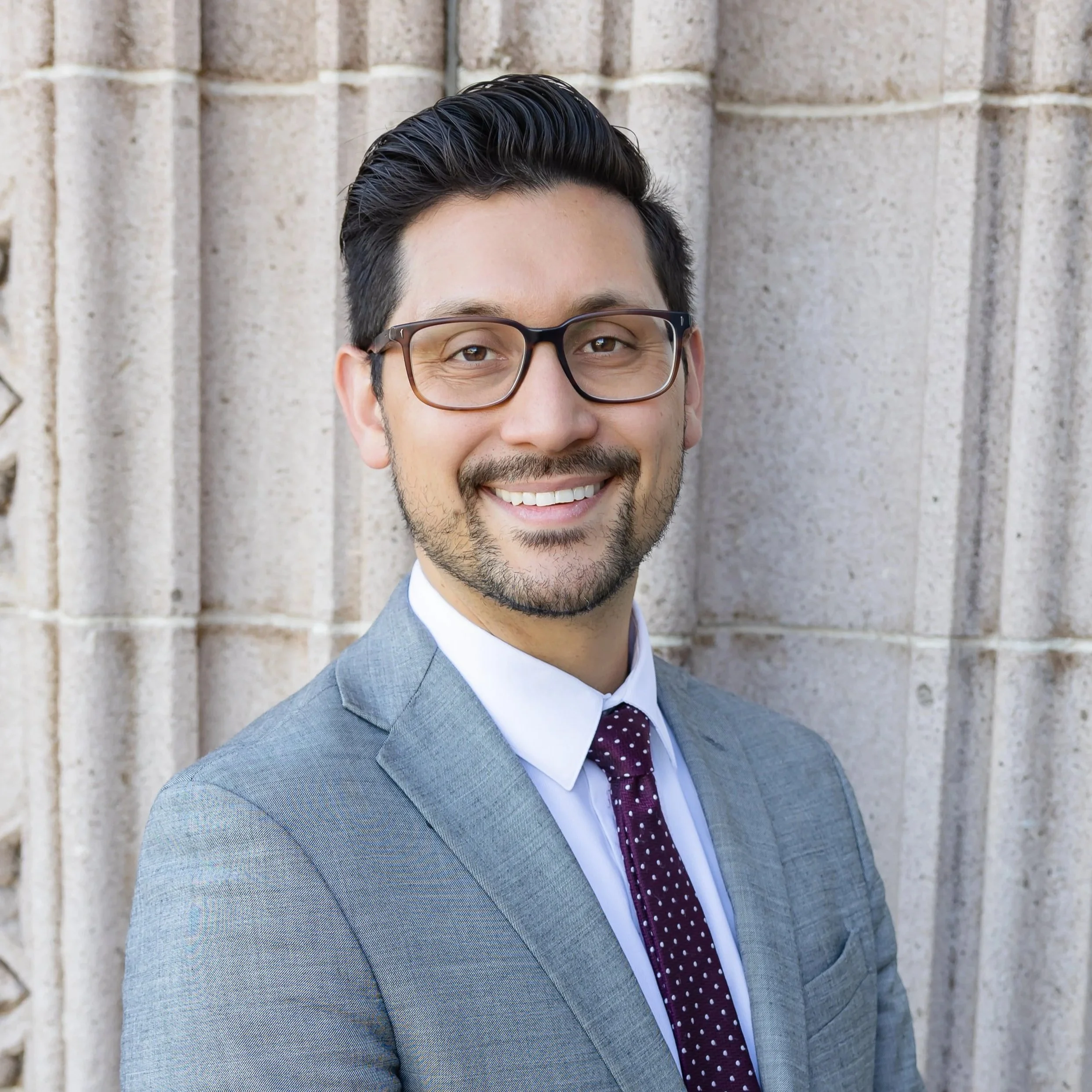
Ralph Pesce
Principal
rpesce@jpgdenver.org